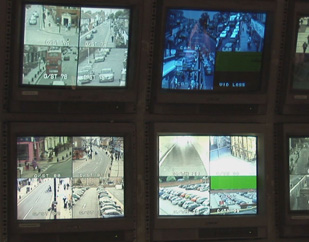
The British government has denied a programme for tackling religious extremism is used by its security agencies to spy on Muslim communities.
In a statement released on Saturday, the Home Office said its $230 million Preventing Violent Extremism strategy did not engage in covert intelligence gathering on potential terrorists.
"Any suggestion that Prevent is about spying is simply wrong. Prevent is about working with communities to protect vulnerable individuals and address the root causes of radicalisation," the Home Office said.
Launched in 2006, the programme's mission was to fund projects aimed at rejecting extremist ideology and employing youth workers and teachers to help young Muslims deemed vulnerable to radical organisations.
But in a critical report, the Institute of Race Relations claimed the programme has, in effect, established "one of the most elaborate systems of surveillance ever seen in Britain".
Arun Kundnani, the report's author, concludes that far from for tackling extremism, Prevent actually fostered division, mistrust and alienation.
"The Prevent progamme constructs the Muslim population as a 'suspect community' ... encourages tokenism, facilitates violations of privacy and professional norms of confidentiality, discourages local democracy and is counter-productive in reducing the risk of political violence", Kundnani said.
Shami Chakrabarti, the director of UK-based political rights watchdog Liberty, also branded Prevent the biggest spying programme in Britain in modern times and "an affront to civil liberties".
"It is information-gathering directed at the innocent and the spying is directed at people because of their religion, and not because of their behaviour."
She noted that the information authorities are gathering include political views, information on mental health, sexual activity and associates and other sensitive information.
And according to other documents presented to the UK's The Guardian newspaper on Saturday, Prevent's intelligence and information can be stored until the people concerned reach the age of 100.
The newspaper also published instances of abuse of the programme, such as lecturers reporting students who attended lectures on Gaza and youth projects pressured to give names of youths to the Metropolitan police of as a condition of funding.
Another opinion
But not all Islamic groups agree the Prevent has been abused.
Ed Husain, of the UK-based Quilliam Foundation, who has advised both Labour and the Conservatives on Islamic extremism and whose foundation receives over a million dollars a year in funding from Prevent, said intelligence gathering before an attack was better than dealing with it afterwards.
"It is gathering intelligence on people not committing terrorist offences - it is morally right to give law enforcement agencies the best chance of stopping terrorists before they strike", he said.
Prevent is run by the Office for Security and Counter Terrorism, a part of the Home Office.