A UN education envoy from the Gulf has called for “sanctions and punishment� to be meted out on Israel and other countries responsible for damaging schools and denying children the right to learn.
Speaking during a debate on schooling during wars and natural disasters, Sheikha Mozah Bint Nasser Al Missned, consort of the Emir of Qatar, accused Israel of denying Palestinian children “their basic right to education�.
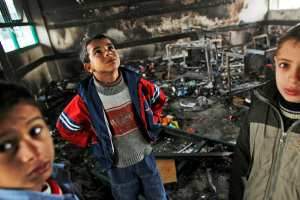
The Qatari royal, a special envoy on education for Unesco, the UN body that helps to conserve mankind’s heritage, called for action to be taken against Israel for bomb-damaging schools during its three-week Gaza onslaught.
“Upholding the right to education requires protecting educational institutions and all their staff from attacks during times of conflict,� Sheikha Mozah told diplomats at UN headquarters on Wednesday.
“This protection can only be ensured through the presence of two essential elements: sanctions and punishment.�
The education campaigner called for the “activation of existing conventions� and “punishing the perpetrators and obliging them to offer appropriate compensation for any human or material damage resulting from their actions�.
The midtown Manhattan meeting of politicians and education chiefs was co-sponsored by Qatar, Nicaragua, Norway and other nations to ensure children have access to school during times of crisis.
The UN estimates that 75 million are not enrolled in school, more than half of them living in areas torn apart by conflict like Gaza, which Israel pounded for 22 days through December and January in response to militant rocket attacks.
During the invasion, Sheikha Mozah wrote to the UN secretary general, Ban Ki-moon, to express her “profound condemnation of and concern over the destruction of educational institutions and the targeting of students and teachers�.
The royal was writing in response to Israeli artillery shelling near Al Fakhura school, in the densely packed Jabaliya refugee camp north of Gaza City on Jan 6, while an estimated 280 families sheltered inside from the violence.
Bodies of the children who numbered among the 43 killed in the attack were laid outside the school the following day, some wrapped in the vivid green flag of Hamas, the hardline Islamic group that has run Gaza since June 2007.
Miguel d’Escoto Brockmann, president of the UN General Assembly, lauded the efforts of Sheikha Mozah, who has committed all her “power and efforts� to helping Palestinian schoolchildren.
“As you may know, she has been working tirelessly to restore as quickly as possible the scores of UN-sponsored schools that were damaged during the horrific invasion of the Palestinian territory of Gaza two months ago,� said Mr D’Escoto.
“She has made the case and the government of Qatar has been instrumental in raising the funds to rebuild the secure, nurturing learning environment that children and young people so desperately need.�
Sheikha Mozah told delegates about the Al Fakhoora campaign, which saw Qatari students show “solidarity to towards their counterparts in Gaza against the latest military invasion�.
“Can we, as an international community, understand what it means to have students deliberately denied their basic right to education by setting up checkpoints preventing them from reaching their schools and universities?� the Qatari royal asked.
“So we realise the danger behind bombing educational institutions bearing the UN flag, the symbol of righteousness and legitimacy?�
During the debate, delegates also discussed the global implications of wars and natural disasters on school-age children, with the next decade expected to herald a shortfall of 18m primary school teachers – mostly in war-torn and disaster-struck regions.
The earthquake that struck Wenchuan County in China’s Sichuan Province in May last year left thousands of children dead and damaged more than 12,000 schools and 6,500 more in neighbouring Gansu Province.
The October earthquake in northeastern areas of Balochistan province, Pakistan, saw 31,000 students affected as 85 per cent of school in some areas collapsed or cracked under the temblor’s strain.
In Zimbabwe, pupil attendance rates dropped last year from 80 per cent to 20 per cent as the country’s economic and political crises saw teachers go without wages and schools shut their doors.
“Where children have been thrown into chaos, schools can provide some measure of stability,� said Asha-Rose Migiro, the UN’s deputy secretary general.
“Schools can also teach them to avoid landmines, protect themselves from child labour, sexual exploitation and HIV, or evacuate in case disaster strikes again.�